http://sammydvintage.com/vintage-style/fur-types/
1.) MINK
THE ANIMAL: Wild or ranched mink, a type of weasel which can swim at free will (referred to as “semi aquatic”) and is most commonly found in North America and countries of Siberia, China and Japan.
HOW TO IDENTIFY: Mink fur is flat and short and because the animal itself is tiny (imagine no larger than a common squirrel), the pelts are long and narrow when construed together to form the garment. The look of a mink piece is described as being almost“shiny and wet.” This makes sense since the animal can swim, so it’s almost as if the hair is like aquatic skin.
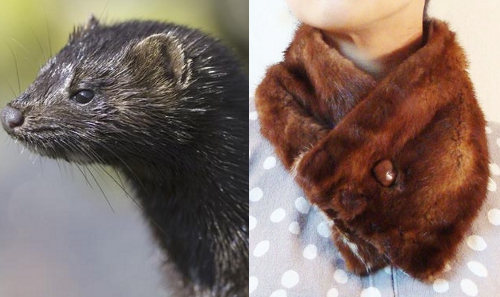
Fur is usually very light but still thick, and according to the Vintage Fashion Guild, dark mink is the most recognizable (see picture of wild mink above). Ranched mink are not born with dark fur coloring, so their fur is often dyed to different shades of browns and even white or a “silver blue” shade.
POPULAR VINTAGE STYLES: The definitive “mink coat.” While other animal fur is used for cold weather protective outer garments, the mink style is what I associate with Hollywoodglamor and luxury.
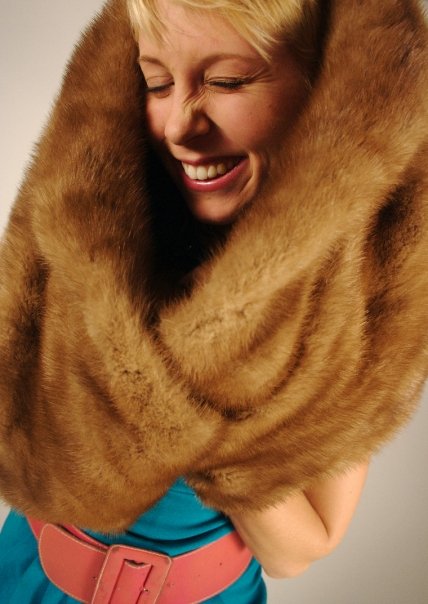
My grandmother passed down her mink stole to me (worn below). The trend of mink began in the 20th century after mink was trapped for some time in large quantities. Beaver had been more popular previously, as you’ll learn why reading how to identify vintage beaver fur below.
It makes financial sense why mink is associated with such glitz & glam: Because the minkanimal is so small, it requires dozens of them to make a coat or a stole. Thus the garment itself is more expensive than the same style made with a larger animal with larger pelts, like a fox.
Plus, mink fur is short and glossy, making mink the go-to animal for high-fashion pieces looking to radiate that luxurious shine.
VINTAGE MINK STOLE